The Republic Today
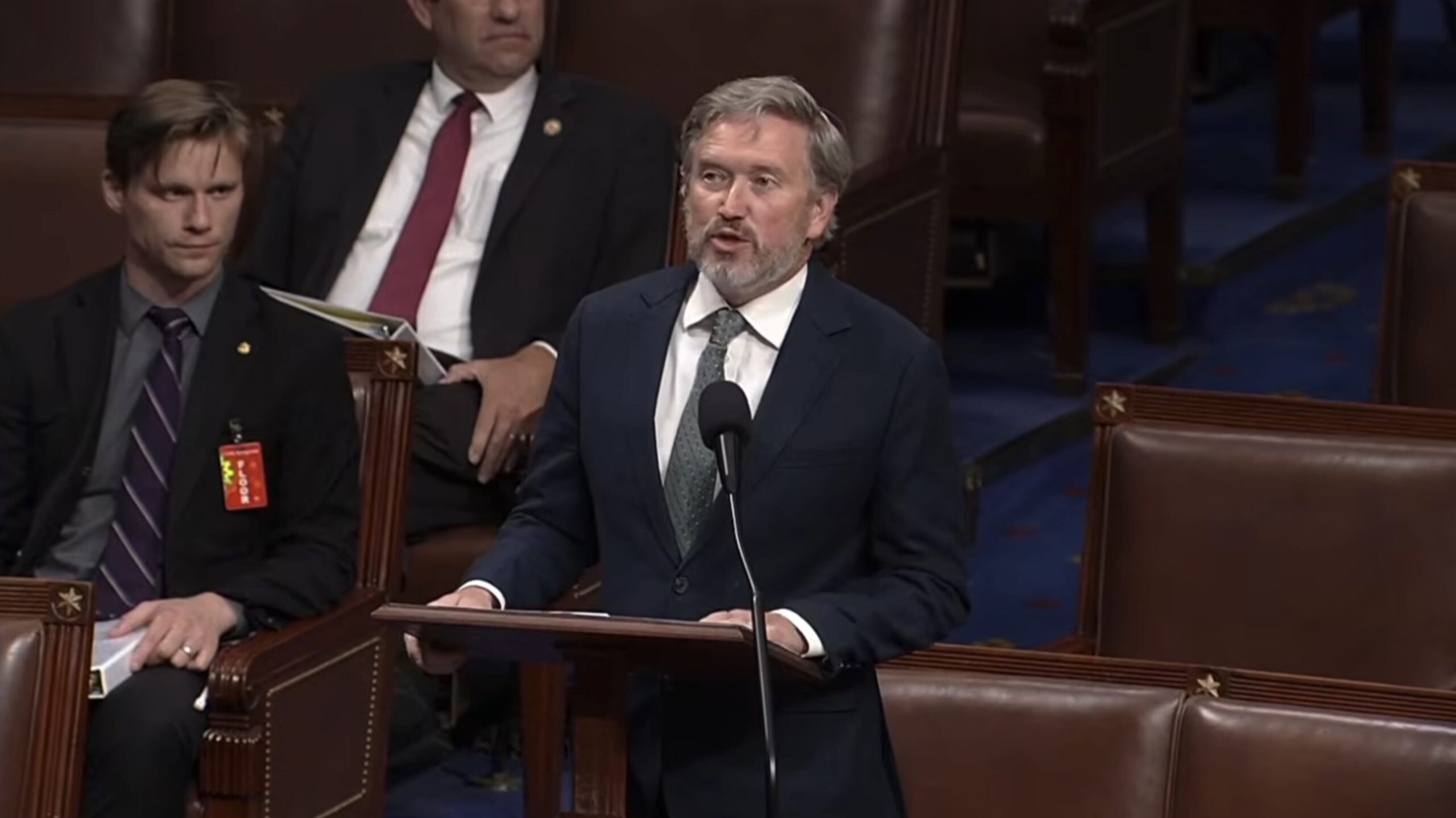
Congressman Massie Voted NO to Protect Economic and Academic Freedom Act of 2026 (H.R. 4795)
The Protect Economic and Academic Freedom Act of 2026 (H.R. 4795) is .consequential. In practical terms, it uses federal higher-education funding as leverage to prevent colleges and universities from…
September 9, 2026 · 8 min read
The Protect Economic and Academic Freedom Act of 2026 (H.R. 4795) is .consequential. In practical terms, it uses federal higher-education funding as leverage to prevent colleges and universities from institutionally boycotting Israel or Israeli entities and to require equal treatment of academic relationships with Israel. It does not, however, directly prohibit students, professors, or campus organizations from criticizing Israel or advocating for BDS.
The House passed the bill on September 3, 2026, by 237–169, with 203 Republicans, 33 Democrats and one Independent voting yes. The version I am describing below is the House-passed version.
What the bill actually does 1. It ties federal student-aid eligibility to a university's commercial conduct
The most significant provision amends Section 487(a) of the Higher Education Act, which governs the agreements colleges sign with the Department of Education in order to participate in federal student-aid programs.
A participating university would have to agree that it will not engage in a "nonexpressive commercial boycott" of a "major strategic partner of the United States."
Although the bill uses the generic term "major strategic partner," the definition points to Section 4 of the United States-Israel Strategic Partnership Act of 2014, which specifically declares:
"Israel is a major strategic partner of the United States."
So for purposes of this bill, the protected country is effectively Israel, plus entities licensed or regulated by Israel or organized under Israeli law.
That means the prohibition is broader than simply saying, "A university cannot boycott the Israeli government."
It encompasses commercial treatment of:
Israel itself; Israeli companies; Israeli universities and other organizations; businesses organized under Israeli law; entities licensed or regulated by Israel. 2. What counts as a prohibited boycott?
The bill defines a prohibited "nonexpressive commercial boycott" as a commercial action, including refusing to deal with someone or terminating an existing business relationship, when two things are true:
First, the purpose is to limit commercial relations with Israel or a covered Israeli entity.
Second, the decision is not based on a valid business reason.
That second element is important.
A university would not necessarily be required to buy Israeli products, contract with Israeli companies or continue every existing Israeli relationship. It could presumably terminate a relationship for ordinary legitimate reasons — price, performance, quality, security, contractual problems, financial considerations and so forth.
What the bill targets is an institutional decision essentially saying:
"We will not do business with this company because it is Israeli or because we are participating in a political boycott of Israel."
3. The consequence could be extremely large
This provision isn't merely attached to a small Israel-related grant.
It is placed in the program participation agreement governing federal student aid.
The Congressional Budget Office explains that an institution violating that agreement could lose eligibility for federal student-aid programs, including Pell Grants and federal student loans.
That is potentially enormous leverage.
The federal government is therefore not simply saying:
"Federal money cannot itself be used to finance a boycott."
It is effectively saying:
"If your institution adopts this particular type of commercial boycott, your institution's eligibility to participate in major federal student-aid programs may be jeopardized."
For many universities, losing access to federal student aid would be financially devastating.
4. There are exceptions
The bill expressly incorporates exceptions found in the federal Anti-Boycott Act of 2018.
Those existing exceptions deal with situations such as complying with certain foreign import or shipping laws, documentation requirements, transportation requirements and particular circumstances involving compliance with foreign law.
So the bill is not written as an absolute rule that every refusal to conduct business with an Israeli entity automatically constitutes a prohibited boycott.
Intent matters, the existence of a legitimate business reason matters, and statutory exceptions matter.
The second major part: academic relationships with Israel
The legislation separately changes Title VI of the Higher Education Act.
This Title VI should not be confused with Title VI of the Civil Rights Act. Here we are talking about federal programs supporting foreign-language study, international education and related academic programs.
Universities receiving or seeking these funds would have to make an annual certification to the Secretary of Education.
The certification has two parts.
A university must certify that its own students and faculty can participate in academic programs involving Israel on the same terms as programs involving other foreign countries.
The bill specifically includes:
conferences; teaching exchanges; cultural exchanges; study-abroad programs; joint research; other collaborative educational activities.
So, for example, a university could not maintain normal academic exchanges with France, Germany and Japan while institutionally declaring that its faculty were forbidden from collaborating with Israeli universities solely because they were Israeli.
The reciprocal requirement is equally important.
The institution must also allow students and faculty from Israeli postsecondary institutions to participate in its programs under the same terms and conditions offered to students and faculty from other foreign institutions.
In plain English:
No institutional academic boycott of Israelis simply because they are affiliated with Israeli universities.
The July 31 certification requirement
Each institution participating in or applying for Title VI programs must submit its certification by July 31 each year.
If it fails to do so, it becomes ineligible for Title VI money in the first federal fiscal year beginning after that July 31.
And Congress made the penalty unusually explicit: the institution could also lose Title VI money from an earlier grant that otherwise would have been payable during that fiscal year.
So a university cannot simply avoid signing the certification and continue spending previously awarded Title VI funds as though nothing happened.
What the bill does NOT do
This distinction is extremely important in evaluating the legislation.
It does not expressly prohibit a professor from criticizing Israel.
It does not prevent students from demonstrating for Palestinians.
It does not make membership in a BDS organization illegal.
It does not prohibit a student newspaper from endorsing BDS.
It does not prohibit faculty from advocating that their university divest from Israeli companies.
It does not criminalize political speech opposing Israel or Israeli government policies.
And the bill creates no new criminal offense for students or professors.
The operative restriction applies to institutional commercial actions and institutional access to federal funding.
That distinction is why supporters repeatedly describe the bill as targeting "nonexpressive commercial" conduct rather than speech.
But it is also where the constitutional argument begins.
The central First Amendment controversy
There are really two competing interpretations of this legislation.
Supporters' argument
Supporters argue that Congress is not suppressing anybody's political opinion.
A university can criticize Israel all it wants. Students and professors may protest or call for a boycott.
But when the institution itself actually refuses commercial dealings solely because an entity is Israeli, supporters contend that becomes economic conduct rather than protected speech.
They also argue that taxpayers should not subsidize universities that discriminate against Israeli businesses, scholars, students or institutions.
On the House floor, supporters described the bill as protecting Israeli students and institutions against discriminatory exclusion while allowing political expression to continue.
Opponents' argument
Opponents respond that a political boycott has historically been a form of expressive association and protest.
Their argument is essentially:
Calling a boycott "nonexpressive" does not necessarily make it nonexpressive.
If a university stops purchasing from an Israeli company specifically to protest Israeli government policy, critics argue that the economic decision itself may communicate a political message.
Representative Jerrold Nadler, who opposes the BDS movement but voted against H.R. 4795, argued that the legislation nevertheless raises serious First Amendment concerns because political boycotts may themselves constitute protected expression.
That constitutional question would almost certainly become an important issue if the bill became law and the government attempted to terminate a university's federal-aid eligibility.
Another significant issue: Israel versus the West Bank
There is also an important drafting issue that isn't obvious from the congressional summary.
The bill protects not merely entities geographically located within Israel's internationally recognized boundaries. It refers to entities "licensed or regulated by, or organized under the laws of" Israel.
There is no explicit geographical exception for Israeli entities conducting operations in the West Bank.
Therefore, as written, an Israeli corporation or organization does not necessarily fall outside the statute simply because the relevant activity occurs in a West Bank settlement.
Critics have argued that this could make it difficult for universities to distinguish between a boycott of Israel itself and a policy directed specifically at Israeli settlement activity. Supporters generally view such distinctions as another mechanism for discriminatory anti-Israel boycotts.
The bill itself does not expressly resolve that territorial issue. Its coverage turns primarily on the legal identity and regulatory status of the entity.
The "Sense of Congress" provision
The last substantive provision is largely symbolic.
Congress declares that limitations on cooperation between American higher-education institutions and a U.S. "major strategic partner" do not serve the:
security, stability and economic vitality of the United States.
A "Sense of Congress" statement generally expresses congressional policy or judgment rather than creating a separately enforceable legal requirement.
Financial impact on the federal government
Interestingly, CBO estimates the bill would have almost no significant federal budget impact.
Why?
CBO assumes universities would generally change their policies rather than sacrifice access to federal funding.
CBO estimates implementation would cost the Department of Education less than $500,000 between 2026 and 2031 and projects no meaningful increase in direct federal spending or the deficit.
That tells you something important about the structure of the bill:
Congress expects the threat of losing federal funding to produce compliance rather than expecting large numbers of universities actually to lose their funding.
My condensed synopsis
At its core, H.R. 4795 uses the federal government's enormous financial relationship with American higher education to discourage institutional participation in the BDS movement against Israel.
It creates two different enforcement mechanisms:
For universities participating in federal student aid: Don't adopt politically motivated commercial boycotts of Israel or Israeli-law entities unless there is a legitimate business justification, or potentially jeopardize access to federal student aid programs.
For universities receiving international-education Title VI money: Certify every year that Israeli academic institutions, students and faculty are treated on substantially the same basis as those from other foreign countries, or lose those Title VI funds.
The bill is therefore not primarily a campus-speech law. A student can still say "boycott Israel." A professor can presumably publish an article advocating BDS. The significant question arises when the university itself implements that boycott as policy.
And that is also the bill's greatest constitutional vulnerability: whether Congress may characterize politically motivated economic boycotts as mere "nonexpressive commercial" conduct and condition an institution's access to federal student aid on refusing to engage in them.
Finally, the bill's definition is broad enough that it may protect Israeli-law entities without drawing a clear distinction between Israel proper and Israeli activity in the West Bank, which is likely to remain another major source of controversy.
Current status: the House passed H.R. 4795 on September 3, 2026, 237–169. The official House-passed text is now the engrossed version of the bill; it is not yet law based on the latest official legislative material available to me.